Pay estimated tax in four installments if you expect to owe $1,000 or more when you file. Use Form 1040-ES. Corporations follow different estimated tax rules. This page is general information, not tax advice.
The route, stop by stop
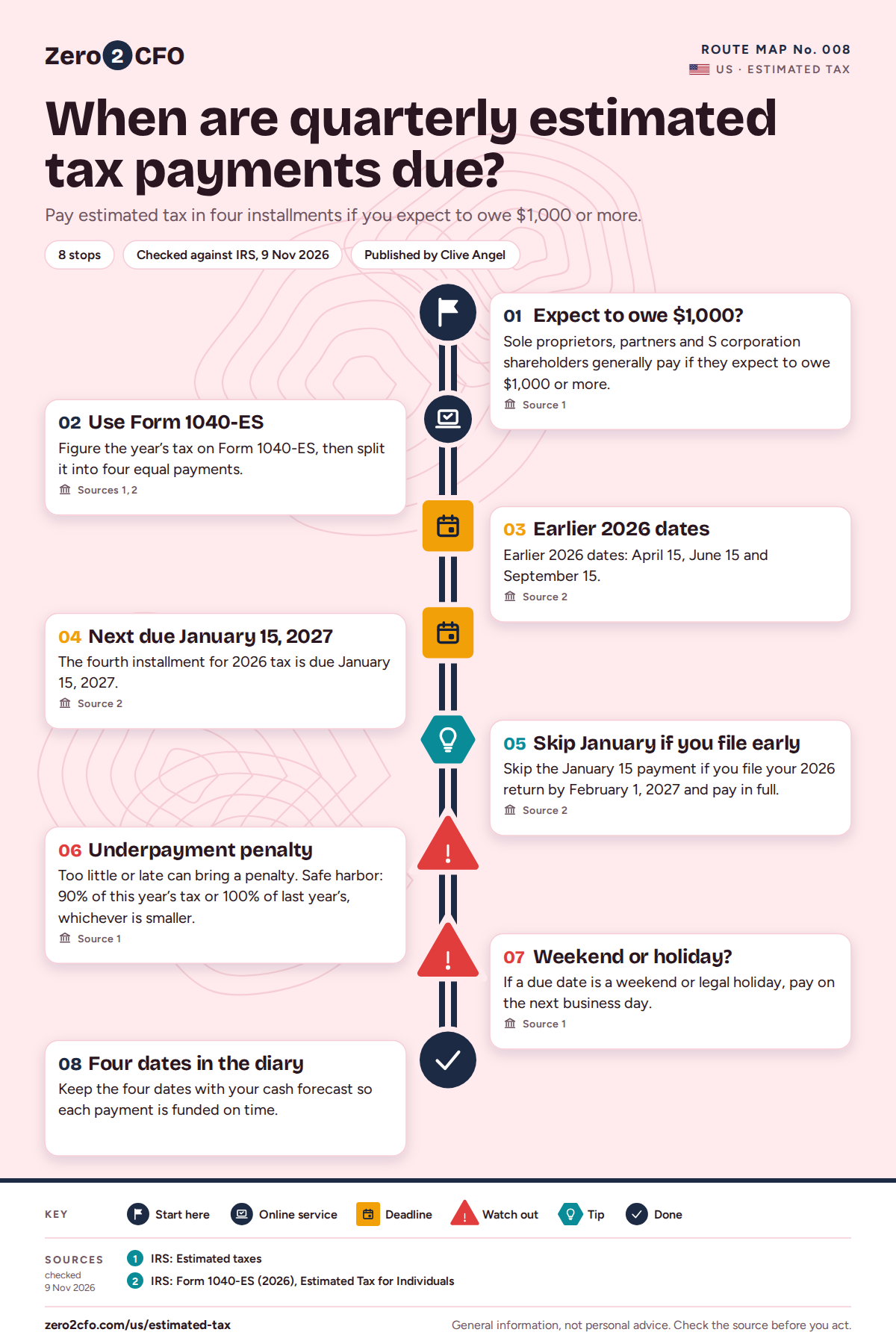
01Expect to owe $1,000?
Sole proprietors, partners and S corporation shareholders generally pay if they expect to owe $1,000 or more.
Source 1
05Skip January if you file early
Skip the January 15 payment if you file your 2026 return by February 1, 2027 and pay in full.
Source 2
06Underpayment penalty
Too little or late can bring a penalty. Safe harbor: 90% of this year’s tax or 100% of last year’s, whichever is smaller.
Source 1
07Weekend or holiday?
If a due date is a weekend or legal holiday, pay on the next business day.
Source 1
08Four dates in the diary
Keep the four dates with your cash forecast so each payment is funded on time.
Who must pay
Individuals, including sole proprietors, partners and S corporation shareholders, generally make estimated tax payments if they expect to owe tax of $1,000 or more when their return is filed.
The four due dates for 2026
Form 1040-ES sets four equal payments: April 15, 2026, June 15, 2026, September 15, 2026 and January 15, 2027. You can pay the whole year by April 15 instead.
The January shortcut
You do not have to make the January 15, 2027 payment if you file your 2026 return by February 1, 2027 and pay the entire balance with the return.
Underpayment penalty
If you do not pay enough tax through withholding and estimated tax payments, you may have to pay a penalty. Generally, most taxpayers avoid it if they owe less than $1,000 after withholdings and credits, or if they paid at least 90% of the tax for the current year, or 100% of the tax shown on the return for the prior year, whichever is smaller.
Common questions
What form do I use?
Form 1040-ES for individuals. Nonresident aliens use Form 1040-ES(NR).
What if a due date is a Saturday?
Pay on the next day that is not a Saturday, Sunday or legal holiday.
Is this tax advice?
No. It is general information from IRS pages checked on 9 November 2026. Rules change, so check the sources before you act.
Where the rules come from
- IRS: Estimated taxes checked 9 November 2026
- IRS: Form 1040-ES (2026), Estimated Tax for Individuals checked 9 November 2026
This map is general information, not personal advice. Rules and rates change, so check the sources before you act. If your situation is tricky, talk to your CPA or tax adviser.