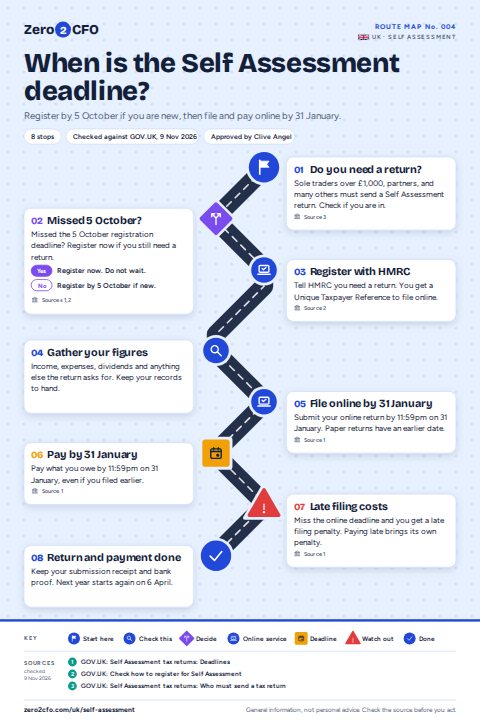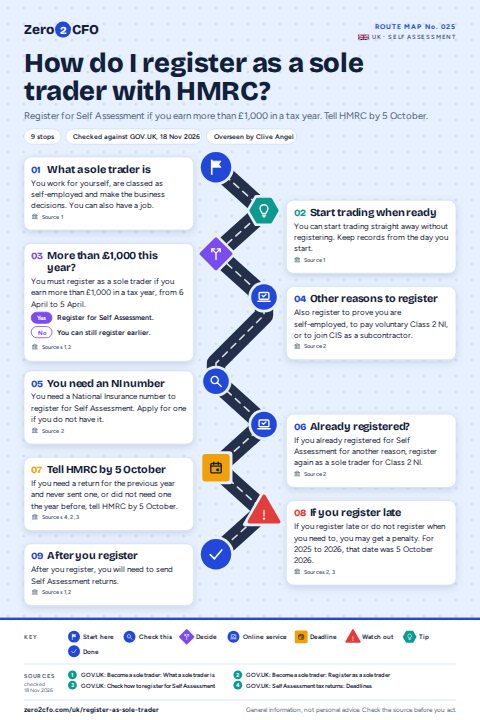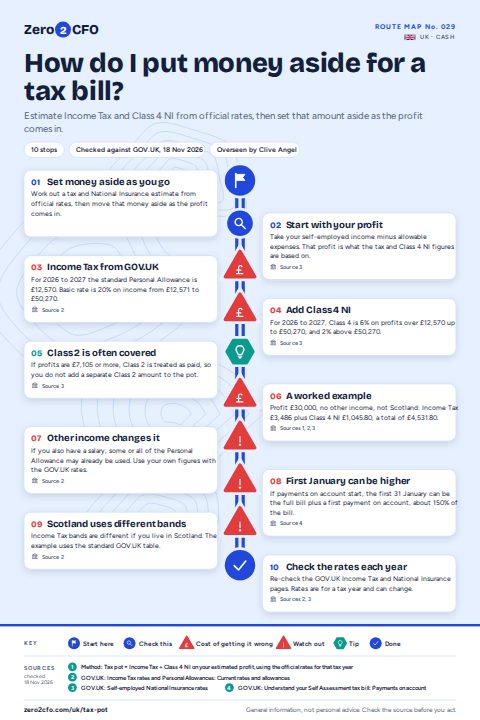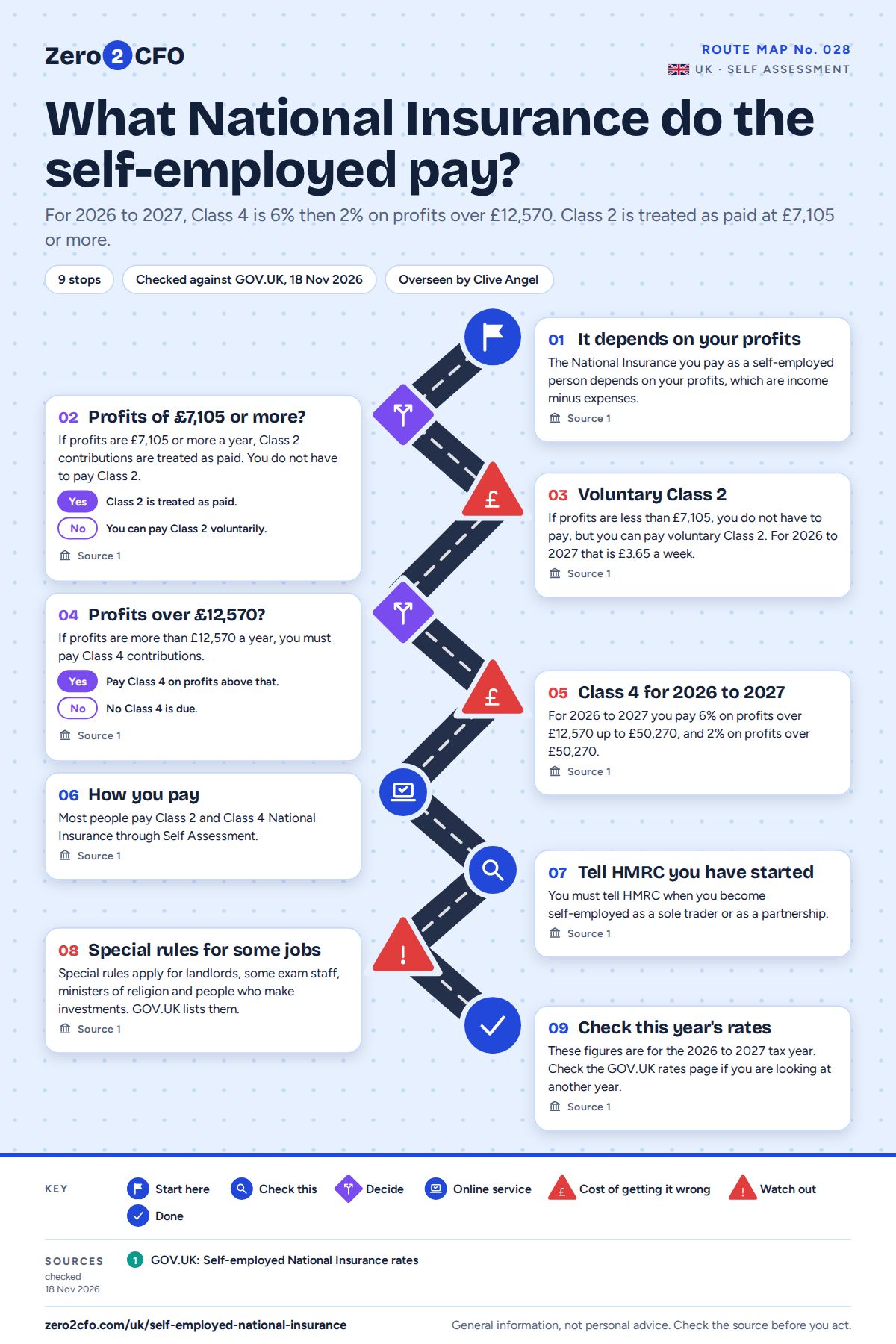
The National Insurance you pay if you are self-employed depends on your profits, which you work out by deducting expenses from your self-employed income. For the 2026 to 2027 tax year, Class 4 is 6% on profits over £12,570 up to £50,270, and 2% on profits over £50,270. Class 2 is treated as paid if your profits are £7,105 or more. This page is general information from GOV.UK, not tax advice.
The route, stop by stop
01It depends on your profits
The National Insurance you pay as a self-employed person depends on your profits, which are income minus expenses.
Source 1
02Profits of £7,105 or more?
If profits are £7,105 or more a year, Class 2 contributions are treated as paid. You do not have to pay Class 2.
YesClass 2 is treated as paid.NoYou can pay Class 2 voluntarily.Source 1
03Voluntary Class 2
If profits are less than £7,105, you do not have to pay, but you can pay voluntary Class 2. For 2026 to 2027 that is £3.65 a week.
Source 1
04Profits over £12,570?
If profits are more than £12,570 a year, you must pay Class 4 contributions.
YesPay Class 4 on profits above that.NoNo Class 4 is due.Source 1
05Class 4 for 2026 to 2027
For 2026 to 2027 you pay 6% on profits over £12,570 up to £50,270, and 2% on profits over £50,270.
Source 1
06How you pay
Most people pay Class 2 and Class 4 National Insurance through Self Assessment.
Source 1
07Tell HMRC you have started
You must tell HMRC when you become self-employed as a sole trader or as a partnership.
Source 1
08Special rules for some jobs
Special rules apply for landlords, some exam staff, ministers of religion and people who make investments. GOV.UK lists them.
Source 1
09Check this year's rates
These figures are for the 2026 to 2027 tax year. Check the GOV.UK rates page if you are looking at another year.
Source 1
Class 2
If your profits are £7,105 or more a year, Class 2 contributions are treated as having been paid to protect your National Insurance record. You do not have to pay Class 2 contributions.
If your profits are less than £7,105 a year, you do not have to pay anything, but you can choose to pay voluntary Class 2 contributions. The Class 2 rate for the 2026 to 2027 tax year is £3.65 a week.
Class 4
If your profits are more than £12,570 a year, you must pay Class 4 contributions. For the 2026 to 2027 tax year you pay:
- 6% on profits over £12,570 up to £50,270
- 2% on profits over £50,270
These figures are for 2026 to 2027 only. Check the GOV.UK page for another tax year.
How you pay
Most people pay Class 2 and Class 4 National Insurance through Self Assessment. You must tell HMRC when you become self-employed as a sole trader or as a partnership.
Special rules apply for landlords, examiners, moderators, invigilators and people who set exam questions, ministers of religion, and people who make investments. GOV.UK sets those out on the same page.
Common questions
Do I pay Class 2 as well as Class 4?
If your profits are £7,105 or more, Class 2 is treated as paid, so you do not have to pay a separate Class 2 amount. If profits are also over £12,570, you must pay Class 4.
What if my profits are under £7,105?
You do not have to pay Class 2 or Class 4. You can choose to pay voluntary Class 2, which is £3.65 a week for 2026 to 2027.
How do I pay it?
Most people pay through Self Assessment.
Is this tax advice?
No. It is general information from GOV.UK pages checked on 18 November 2026. It does not tell you how much National Insurance is due in your case. These rates are for 2026 to 2027. Check the sources before you act.
Where the rules come from
- GOV.UK: Self-employed National Insurance rates checked 18 November 2026
This map is general information, not personal advice. Rules and rates change, so check the sources before you act. If your situation is tricky, talk to your accountant.
Franchise networks can share this Route Map with their franchisees under their own name. See all the Route Maps for new UK franchisees.