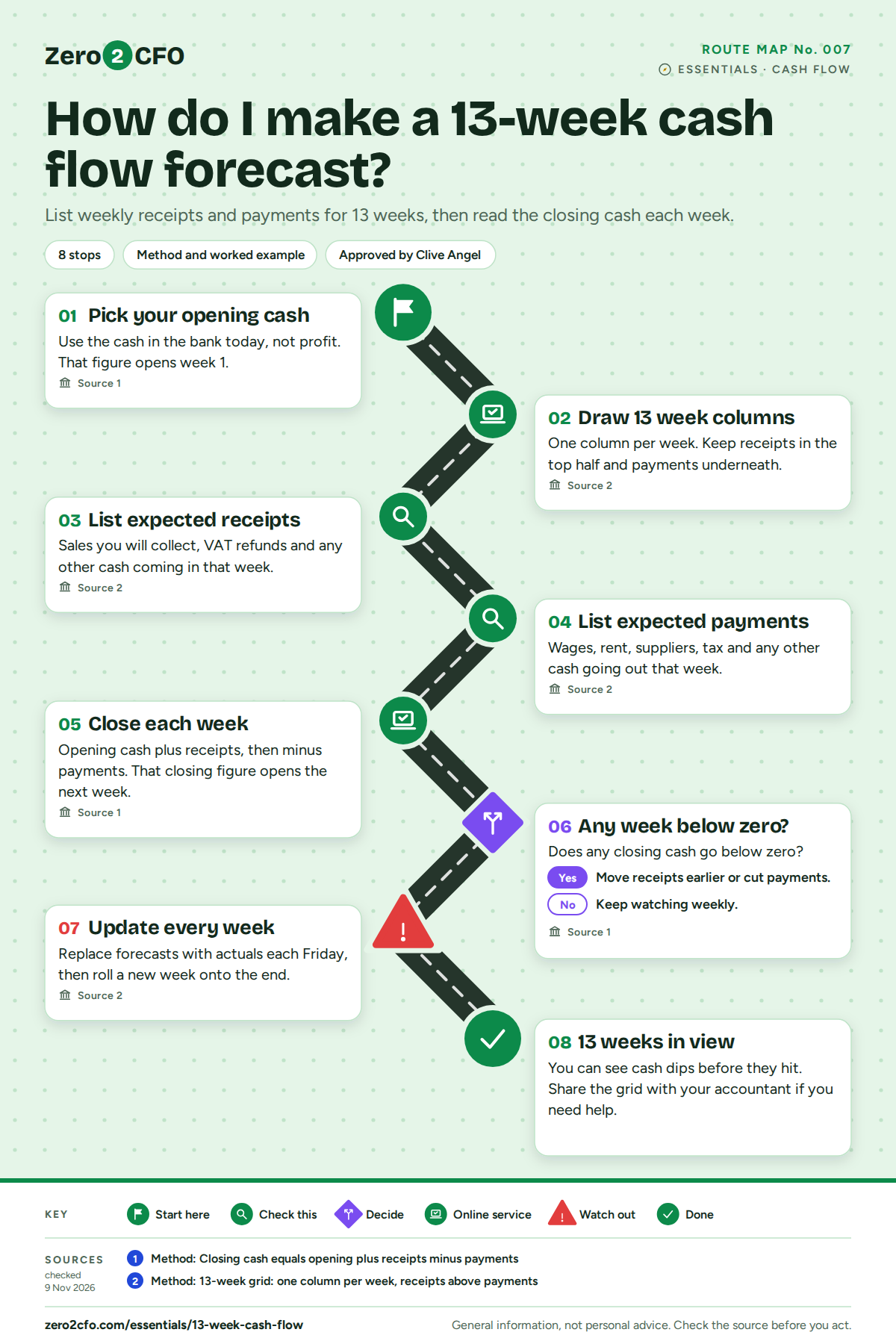
A 13-week cash flow forecast is a weekly grid of cash in and cash out. Closing cash each week equals opening cash plus receipts minus payments. This page is a worked method, not tax advice.
The route, stop by stop
01Pick your opening cash
Use the cash in the bank today, not profit. That figure opens week 1.
Source 1
02Draw 13 week columns
One column per week. Keep receipts in the top half and payments underneath.
Source 2
03List expected receipts
Sales you will collect, VAT refunds and any other cash coming in that week.
Source 2
05Close each week
Opening cash plus receipts, then minus payments. That closing figure opens the next week.
Source 1
06Any week below zero?
Does any closing cash go below zero?
YesMove receipts earlier or cut payments.NoKeep watching weekly.Source 1
07Update every week
Replace forecasts with actuals each Friday, then roll a new week onto the end.
Source 2
0813 weeks in view
You can see cash dips before they hit. Share the grid with your accountant if you need help.
The formula
Closing cash equals opening cash plus receipts minus payments. The closing figure for week 1 becomes the opening figure for week 2.
How to build it
Make 13 columns, one per week. List named receipts at the top of each column and named payments underneath. Total each side, then apply the formula.
Reading the result
If any week closes below zero, move receipts forward, delay payments you can delay, or arrange finance before that week arrives. Update the grid every week with actuals.
Common questions
Is this the same as a profit forecast?
No. It tracks cash in the bank, not profit.
How often do I update it?
Every week. Replace forecasts with actuals and add a new week at the end.
Do I need software?
A spreadsheet is enough. Name every line so you can see what drives each total.
Is this tax advice?
No. It is a worked method checked on 9 November 2026. Use your own figures.
Where the rules and methods come from
- How it's worked out: Closing cash equals opening plus receipts minus payments
Worked example: Week 1 opens at £12,000. Receipts £8,000. Payments £9,500. Closing cash is £10,500, which opens week 2. - How it's worked out: 13-week grid: one column per week, receipts above payments
Worked example: Make 13 weekly columns. In each column list named receipts (sales, VAT refunds) then named payments (wages, rent, tax). Totals feed the closing cash formula.
This map is general information, not personal advice. Rules and rates change, so check the sources before you act. If your situation is tricky, talk to your accountant.